
Introduction
Choosing the right dental laboratory is important for dentists and dental practices because it can affect restoration quality, accuracy, aesthetics and turnaround time. This is especially important for implant cases, where precise manufacturing and good dentist–technician communication are essential.
For UK dental practices, a good laboratory should offer more than manufacturing services. It should provide consistent quality, reliable turnaround and professional technical support, helping dentists manage implant restorations, crowns, bridges and Dental Prosthetics with confidence. Ambridge Ceramics provides dental laboratory services designed to support dental professionals with quality restorations and reliable laboratory workflows.
Why Choosing the Right Implant Dental Laboratory Matters
Implant dentistry requires precision. A restoration needs to fit accurately, function correctly and meet the aesthetic expectations of both the dentist and patient.
When choosing a dental laboratory UK, dentists should consider more than price. Restoration quality, communication, technology, materials, turnaround times and technical support all contribute to a successful working relationship.
A reliable laboratory can also make a dental practice's workflow easier. Clear communication and predictable delivery times allow dental teams to plan appointments more effectively and provide a better patient experience.
Key Factors to Consider When Choosing an Implant Dental Laboratory in the UK
Below are the critical clinical and technical criteria UK dental practitioners should evaluate when selecting an implant laboratory partner.
1. Restoration Quality & Clinical Accuracy
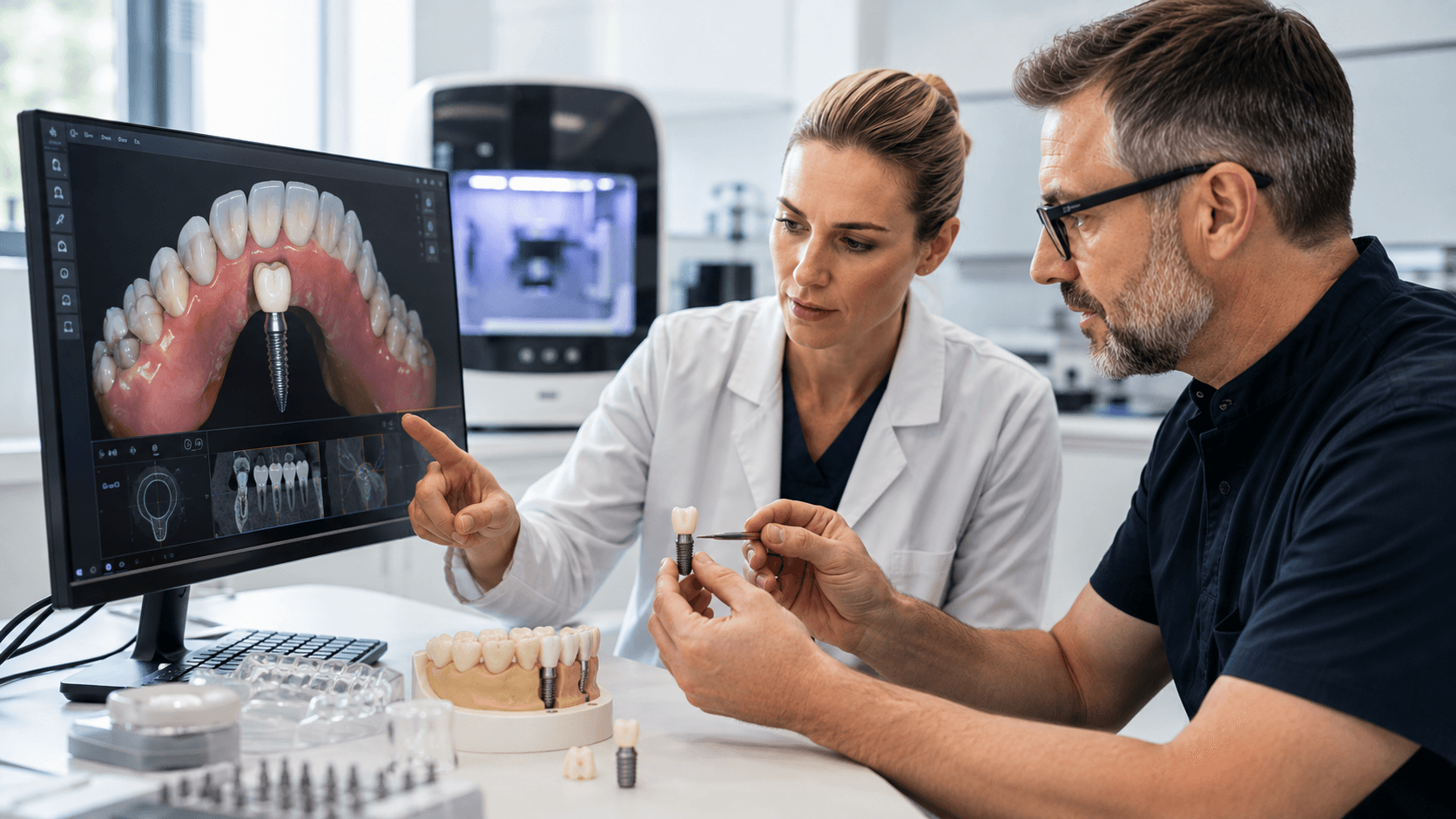
Quality should be one of the first things dental practices evaluate. Dental professionals should ask about the laboratory's experience producing implant restorations and assess the consistency of its work.
For example, if a practice regularly provides the dental crowns patients require, the laboratory should be able to produce restorations with appropriate fit, contacts, occlusion and aesthetics.
For implant cases, accuracy is particularly important. Whether a practice requires an implant crown, bridge or more complex restoration, the laboratory should have appropriate processes for achieving predictable results.
If aesthetics are important to a dental practice, the practice may also want to review examples of ceramic restorations, including a ceramic dental crown, before selecting a laboratory.
2. Consistency of Quality
One excellent case does not necessarily demonstrate consistent laboratory performance.
A good laboratory should be able to maintain a reliable standard across different cases and restoration types. Dental practices should ask to see a broader portfolio rather than relying on one or two examples.
Consistency can be particularly valuable for busy dental practices, where multiple cases may be sent to the laboratory each week. Predictable quality reduces unnecessary adjustments and helps dentists maintain confidence in their chosen laboratory.
3. Implant Expertise & Experience
When choosing an implant laboratory, dental practices should look for genuine experience in implant dentistry.
Practices should consider whether the laboratory has experience with:
Laboratory Capabilities
Core implant restorations and clinical workflows handled by our technicians:
Implant Crowns
Single-unit screw-retained & cement-retained restorations
Implant Bridges
Multi-unit anterior and posterior bridge structures
Custom Abutments
Anatomical titanium & zirconia custom abutments
Full-Arch Restorations
Milled titanium bars & monolithic zirconia full-arch
Complex Implant Cases
Combination, angulated & esthetic zone cases
Different Implant Systems
Compatibility across major major UK implant platforms
The UK implant market provides opportunities for practices offering implant treatment, so having an experienced laboratory partner can be valuable for both routine and complex cases.
A laboratory that understands implant workflows can also help dentists communicate technical requirements more effectively.
4. Digital Workflow & Technology
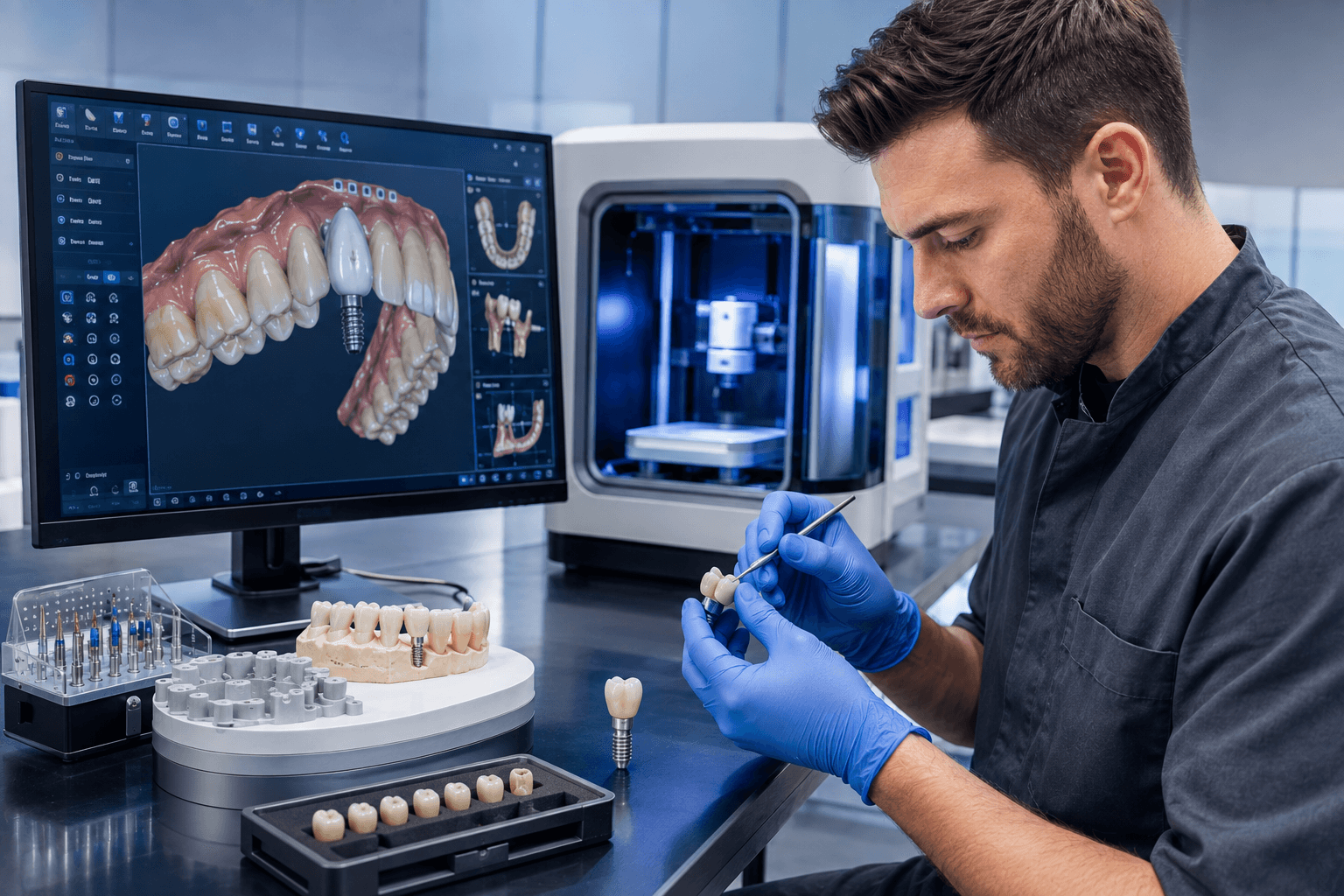
Digital dentistry has changed the way dentists and laboratories collaborate. Before choosing a laboratory, dental practices should check whether it can support the practice's preferred digital workflow.
This may include intraoral scans, digital impressions, CAD/CAM design, digital case submission, 3D printing, and digital implant planning.
The Ambridge Digital Workflow
A seamless digital pathway connecting your dental practice to our lab technicians:
Intraoral Scans
Direct digital capture from any major scanner
Digital Impressions
Instant digital impression verification
CAD/CAM Design
Technician-guided 3D anatomical design
Digital Case Submission
Streamlined secure file transfer
3D Printing
Precision model & resin component printing
Digital Implant Planning
Surgical guide & emergence profile mapping
A strong digital workflow can make communication faster and reduce unnecessary manual steps between the dental practice and laboratory.
For practices already using digital scanning technology, choosing a laboratory that can work efficiently with digital files can be an important consideration.
5. Materials & Product Options
The laboratory should offer materials suitable for the types of cases a practice provides.
Depending on the restoration, options may include zirconia, lithium disilicate, titanium, PFM and other restorative materials.
For example, a practice providing cosmetic treatments may have different requirements from a practice focused primarily on implant dentistry.
Practices should also consider whether the laboratory can work with the components and materials required for their cases. A laboratory with a broad range of capabilities can make it easier for a growing practice to manage different treatment requirements through one trusted partner.
6. Dentist–Technician Communication & Technical Support
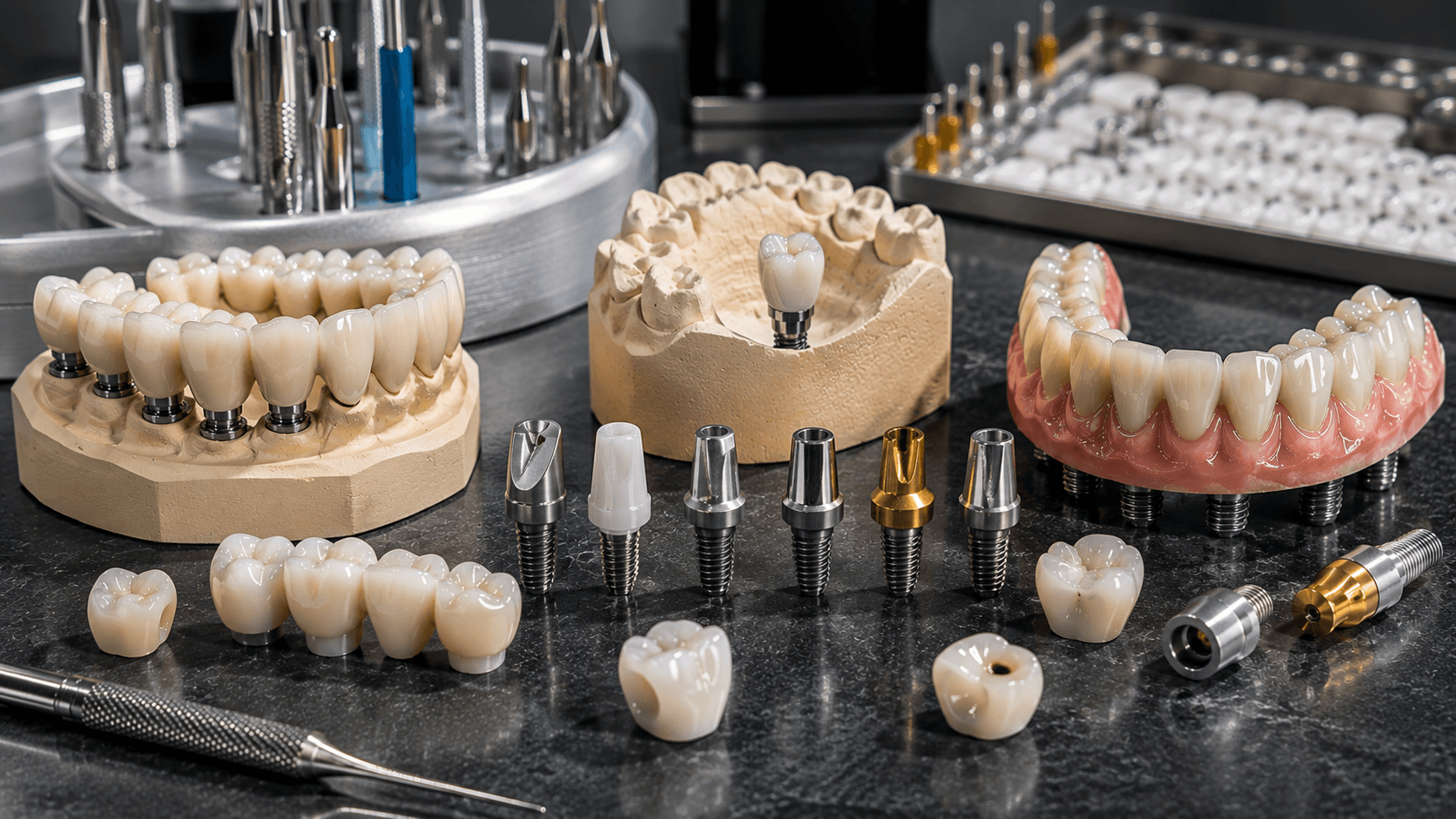
Good communication can make a significant difference to complex cases.
Dentists should look for a laboratory where they can communicate clearly with technicians when discussing case requirements, aesthetics, shade selection or technical questions.
For more complicated implant cases, direct discussion between the dentist and technician can help both sides understand the treatment objectives before production begins.
A responsive laboratory can also make it easier to resolve questions quickly rather than allowing a small issue to delay a case.
7. Turnaround Time & Delivery Reliability
Before choosing a laboratory, dental practices should understand its normal turnaround times and how it handles urgent cases. More importantly, practices should consider whether the laboratory consistently meets the agreed delivery schedule.
Reliable turnaround allows a dental practice to plan patient appointments with greater confidence.
Whether a dental practice is searching online for a dental laboratory near me, a local laboratory or a specialist laboratory serving practices across the UK, delivery reliability should be considered alongside location.
8. Remake, Adjustment & Aftercare Policy
Even with careful planning, some restorations may require adjustments. Before starting a relationship with a laboratory, dental practices should understand how it handles remakes and corrections.
A professional laboratory should have a clear process for dealing with cases that require adjustment.
Questions Dental Practices Should Ask:
- Is the remake process clearly explained in writing?
- Is communication straightforward when an occlusal or shade issue occurs?
- Can the technician assist in identifying the root clinical cause?
- How quickly can a corrected restoration be supplied for refitting?
A transparent approach to aftercare can help build trust between the dental practice and laboratory.
9. UK Compliance & Quality Control
Quality control should be an important part of a dental practice's laboratory selection process.
Dental practices should ask about the laboratory's manufacturing processes, documentation, material traceability and internal quality checks. UK dental practices should also consider whether their laboratory partner operates in accordance with the requirements applicable to the products and services it provides.
This is especially relevant when working with implant components, restorations and other Dental Prosthetics.
The objective is simple: dental practices should have confidence that their cases are being produced through a controlled and professional process.
10. Pricing, Transparency & Overall Value
Price matters, but the cheapest laboratory is not necessarily the best choice.
Instead, dental practices should consider the overall value they receive from the laboratory. Practices should compare pricing alongside restoration quality, communication, turnaround time, technical support and remake policies.
The same principle applies when purchasing dental supplies UK online or sourcing products through Dental Wholesalers UK. A lower upfront price does not always represent better long-term value.
For a dental practice, reliable quality and fewer avoidable problems can be more valuable than simply choosing the lowest laboratory fee.
11. Case Portfolio & Clinical Evidence
Before choosing a laboratory, dental practices should review examples of its previous work.
Practices should look for cases relevant to their practice, such as implant crowns, bridges, full-arch restorations, and aesthetic restorations.
A strong portfolio can help dental professionals understand the laboratory's capabilities and whether its approach matches the standard the practice aims to provide to patients.
Dental practices can also look for dentist testimonials, case studies and professional feedback when evaluating a potential laboratory partner.
12. Reputation & Professional Experience
Finally, dental practices should consider the laboratory's overall reputation.
Practices should look beyond online ratings and consider its experience working with dental professionals. A laboratory that understands the needs of dentists and dental practices is more likely to understand the importance of communication, deadlines, accuracy and consistency.
Whether a dentist finds a laboratory through a search such as “dental laboratory near me”, “dental practices near me” or “dental laboratory UK”, location should only be one part of the decision.
The laboratory's expertise, service and ability to support a dental practice's clinical workflow should carry greater weight.
Ambridge Ceramics focuses on supporting dental professionals through reliable laboratory services and restoration solutions.
Avoid When Choosing an Implant Dental Laboratory
Avoid When Choosing an Implant Dental Laboratory
Watch for these warning signs when evaluating potential UK laboratory partners:
Unclear or constantly changing pricing
Hidden surcharges, ambiguous remake fees, or volatile price lists without advance notice.
Poor communication
Inability to speak directly with the technician handling your case or unhelpful customer service.
Unreliable turnaround times
Frequent delivery delays that force chair-side appointment rescheduling.
Limited implant experience
Lack of deep familiarity with sub-mucosal biology, custom abutments, or specific implant systems.
No clear remake or adjustment process
Vague policies regarding who assumes responsibility when a restoration requires adjustment.
Limited examples of relevant clinical work
Inability or reluctance to provide a detailed portfolio of previous implant and aesthetic cases.
Poor digital workflow
Inability to seamlessly accept intraoral scans or work with open CAD/CAM digital file formats.
Difficulty contacting the technical team
Barrier walls between clinicians and bench technicians when urgent case advice is needed.
Lack of transparent quality-control processes
Missing documentation, unknown material origin, or lack of rigorous internal quality checks.
Conclusion: Choose a Laboratory Partner You Can Rely On
Choosing an implant dental laboratory is ultimately about finding a partner that can support a dental practice's clinical standards and practice workflow.
Dentists should consider restoration quality, consistency, implant expertise, digital technology, materials, communication, turnaround time, aftercare, quality control, pricing and professional reputation before making a decision.
For practices looking for a laboratory partner in the UK, Ambridge Ceramics is a Top Dental Laboratory in the UK, supporting dental professionals with high-quality dental restorations, digital workflows and professional laboratory services.
The right laboratory should not simply manufacture a restoration. It should provide the expertise, communication and reliability a dental practice needs to deliver confident patient care.
Ready to Work With Ambridge Ceramics?
Talk to our dental laboratory team about your restoration requirements and laboratory workflow. Experience consistent quality, digital precision, and technician-led technical support for your implant cases.
Continue Reading
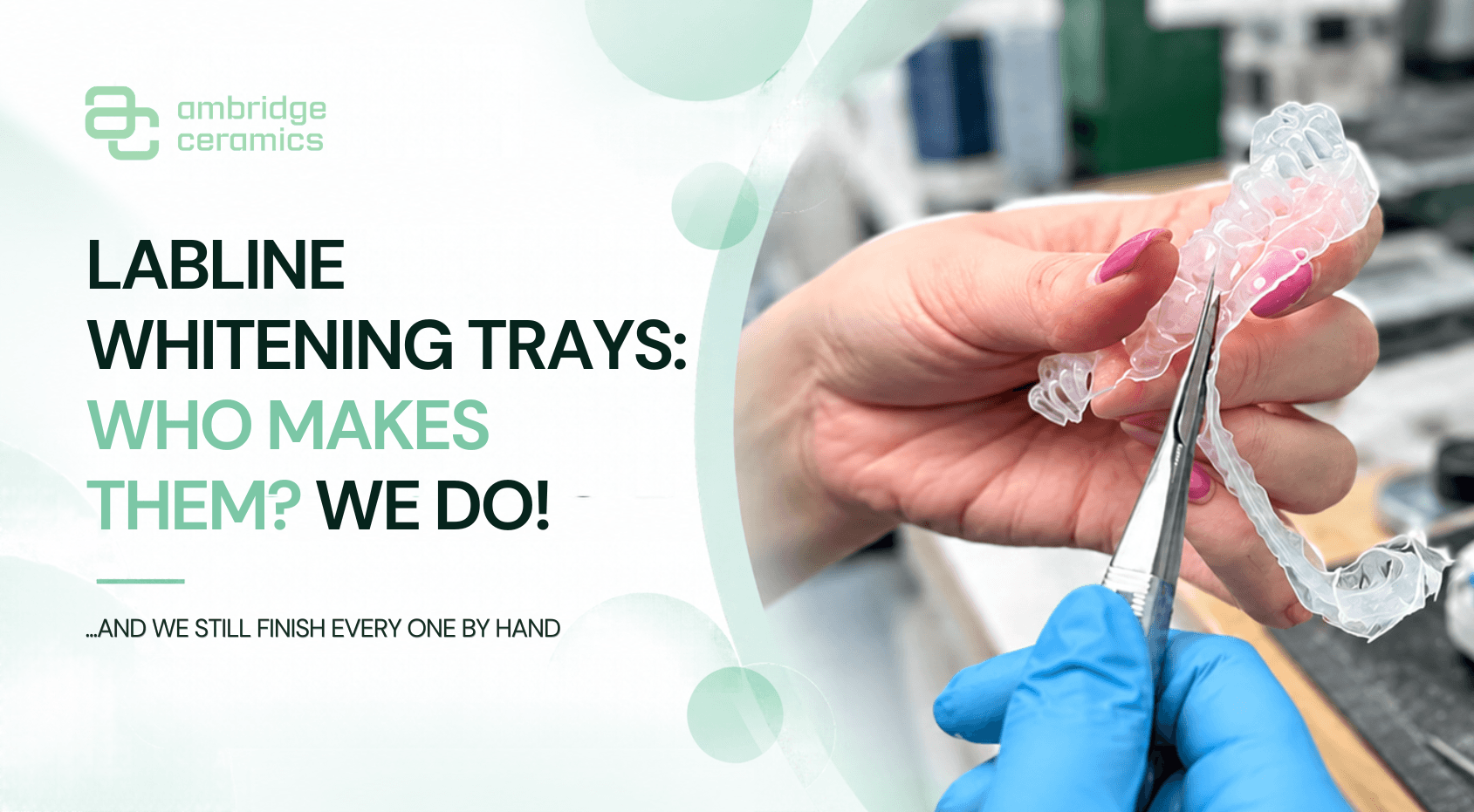
Labline Whitening Trays: Who Makes Them? We Do !
More than 30 years ago, when teeth whitening and custom tray whitening was only just finding its way into UK practices, we along with Optident Dental Solutions set up Labline, the first dental laboratory in Britain dedicated solely to making Bleaching trays or Whitening trays as they became known.

MHRA, GDC and DAMAS: What Your Dental Lab Should Be Able to Show You
When you choose a dental lab, the restoration in your hand is only half the story. The other half is the paperwork behind it: who made it, to what standard, and whether the lab is properly registered to make it at all.